


Complete Analysis of the Chain of Survival : What You Can Do Before Help Arrives
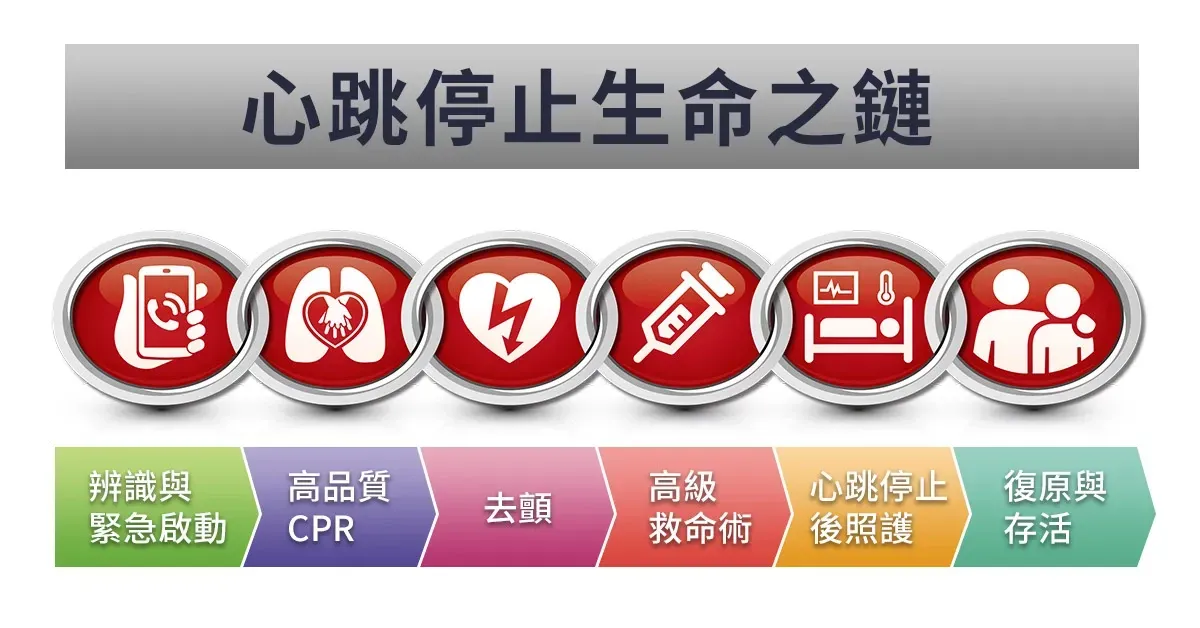
Every Minute of Delay Lowers the Chance of Survival
Taiwan records more than 20,000 out-of-hospital cardiac arrest (OHCA) cases every year. Cardiac arrest can happen anywhere — a metro station, a gym, an office, a hotel lobby, or any public space that seems perfectly safe.
Ambulance response times vary from region to region, but for every minute of delay after cardiac arrest, the patient's chance of survival tends to decrease by 7–10%. That waiting period is often what determines the outcome.
What fills this gap is a systematic approach to emergency response developed by the American Heart Association (AHA) — the Chain of Survival.
What Is the Chain of Survival? Six Links, Each One Essential
The Chain of Survival breaks the full emergency response to cardiac arrest into six connected links:
🔗 Link 1: Early Recognition and Call for Help When someone suddenly loses consciousness and isn't breathing normally, call out for help and dial 119 right away. The golden window starts counting down from this moment.
🔗 Link 2: Early High-Quality CPR While waiting for emergency responders, continuous chest compressions help keep blood flowing to the brain. Every compression buys the patient more time.
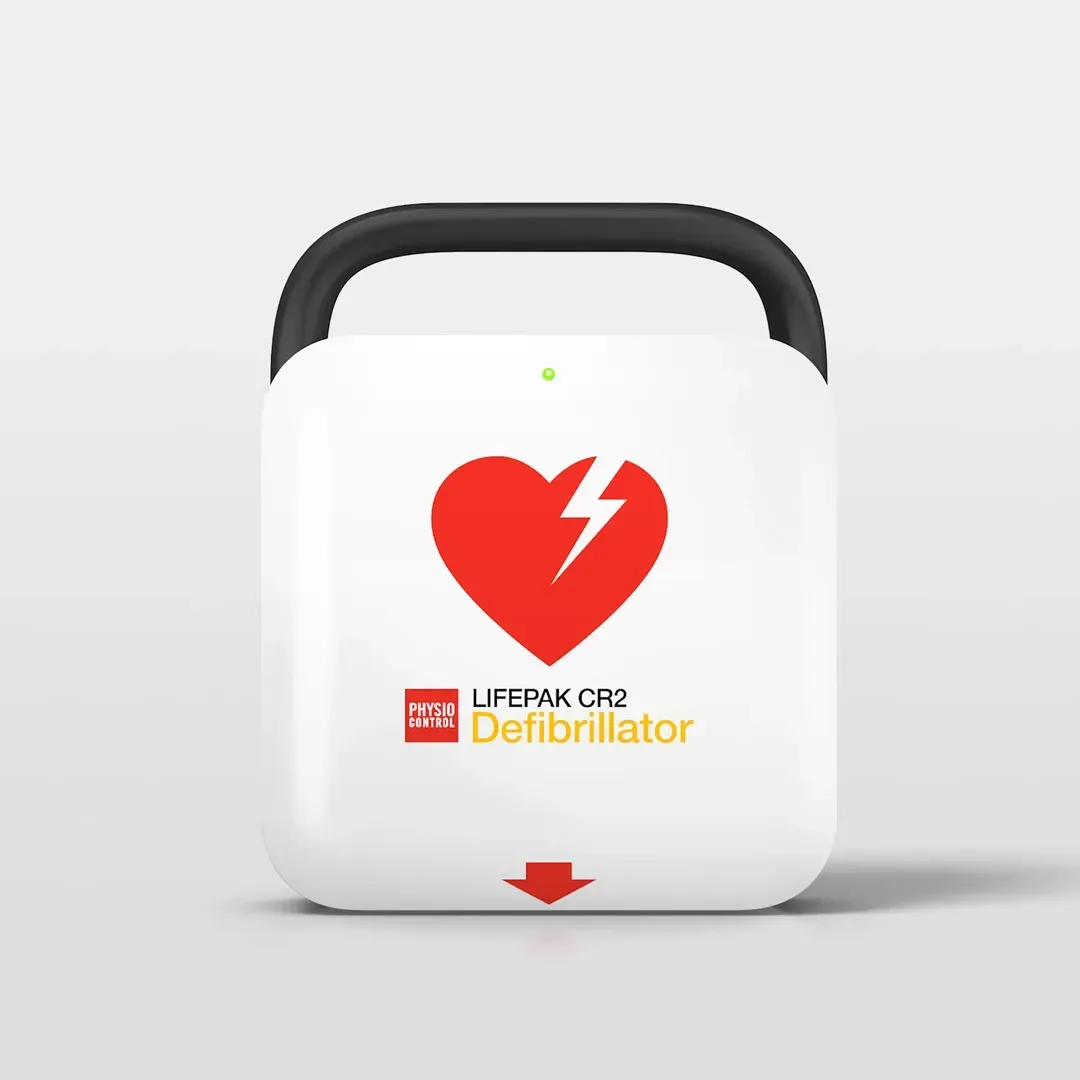
🔗 Link 3: Early Defibrillation with an AED For patients whose cardiac arrest is caused by ventricular fibrillation, an AED is currently the key device available outside a hospital for correcting this life-threatening heart rhythm. AEDs guide users through voice prompts, automatically analyze heart rhythm, and only advise a shock when needed — designed so members of the public can use them too.
👉 What Is an AED? A Complete Guide to Its Use and Legal Considerations
🔗 Link 4: Advanced Life Support Emergency responders take over upon arrival and provide advanced medical care.
🔗 Link 5: Integrated Post-Resuscitation Care Once the patient reaches the hospital, the medical team continues treatment and monitoring.
🔗 Link 6: Recovery and Rehabilitation This link covers the patient's rehabilitation, psychological support, and return to daily life after discharge.
The first three links all take place before the ambulance arrives, and depend heavily on how bystanders respond and whether the right equipment is in place — which is exactly why emergency preparedness in public spaces matters so much.
The Hidden Challenge in Link 2: Can Manual CPR Hold Up?
Even for trained responders, compression quality tends to decline after about 2 minutes of continuous standard CPR. Effective chest compressions require:
- Compression depth of 5–6 cm
- A rhythm of 100–120 compressions per minute
- Minimal interruption
In reality, when there are only one or two bystanders, when help is still some distance away, or when CPR needs to continue in a moving environment (such as an elevator or hallway), maintaining manual CPR at this standard becomes difficult.
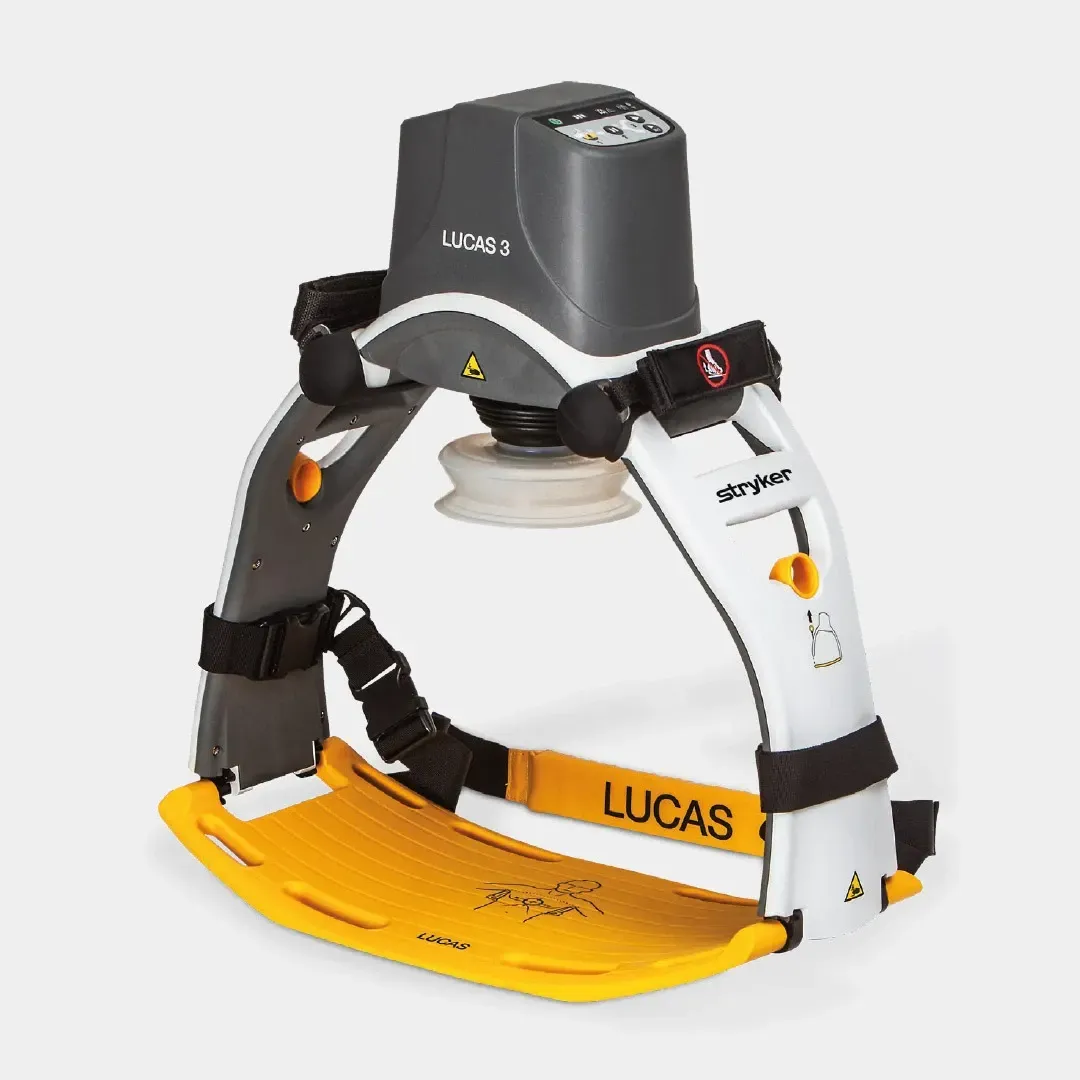
This is why some emergency care systems — in medical facilities, high-risk environments, and situations involving long-distance transport — rely on mechanical CPR devices to help keep chest compressions consistent, regardless of responder fatigue or environmental constraints.
KLUX distributes the
LUCAS® 3 mechanical CPR system, manufactured in Sweden under the Stryker Group. It's designed to help maintain stable chest compressions in situations where manual CPR is limited — during patient transport, extended emergency response, or in settings like cardiac catheterization labs that require sustained compressions.
👉 Learn More About the LUCAS® 3 Mechanical CPR Device
The Key to Link 3: Having an AED Isn't Enough
The growing presence of AEDs marks real progress for public safety in Taiwan in recent years. More than 13,000 AEDs are currently registered in public spaces nationwide, and regulations require many types of venues to have one installed.
But even the best AED can't help in an emergency if no one knows how to use it or the device isn't properly maintained.
Many venues that already have an AED installed run into the same real-world challenges:
- Staff know an AED is on-site, but aren't sure how to use it
- Pads or batteries have expired, so the device won't power on properly
- No regular maintenance records exist, making it hard to trace issues when something goes wrong
That's why installing an AED is only the first step.
Regular maintenance, staff training, and device management are what actually make an AED ready to work when it's needed most.
👉 Which Venues Are Required by Law to Install an AED?
👉 The Complete Guide for AED Administrators
👉 KLUX IoT Smart Management System
KLUX IoT Smart Management System
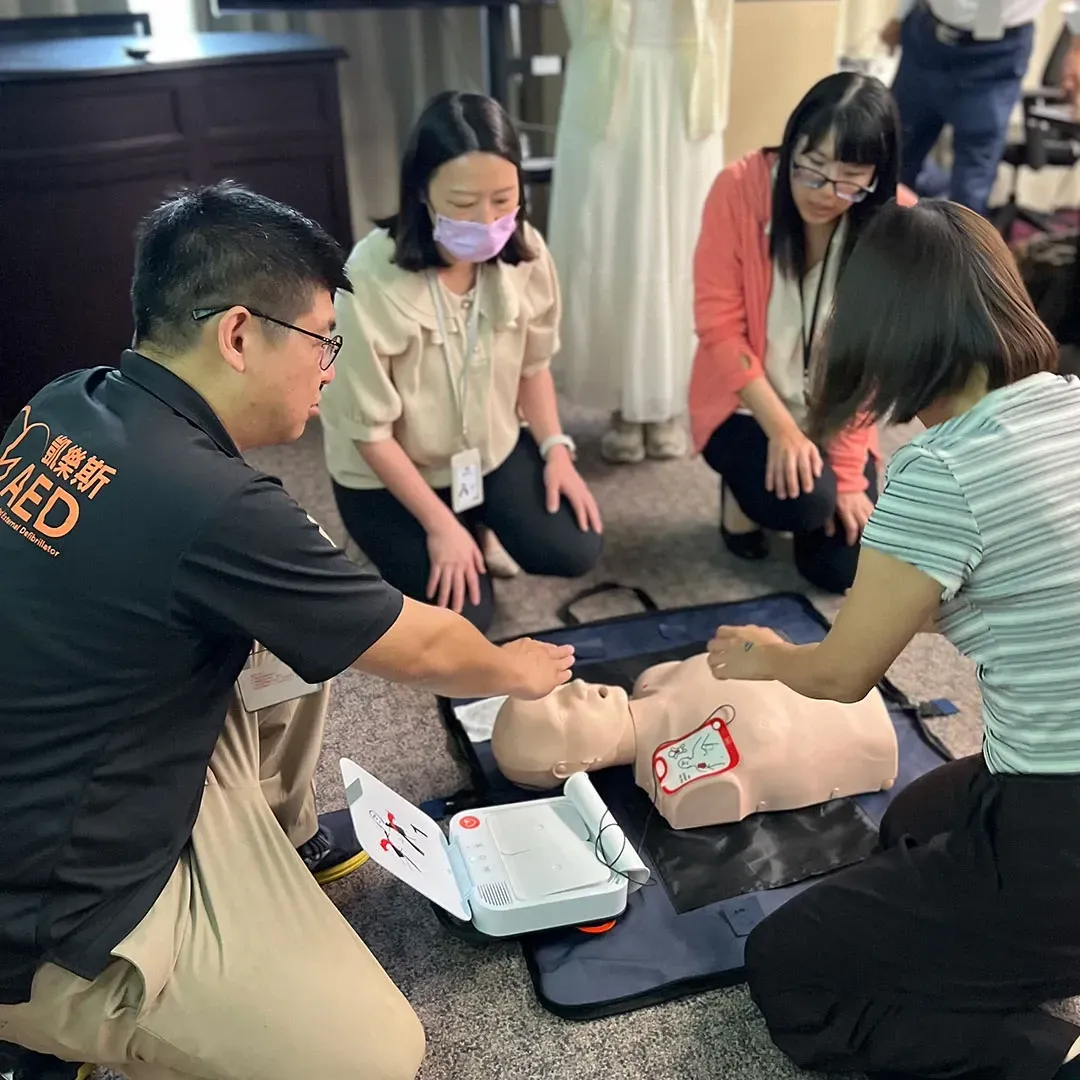
The Ministry of Health and Welfare's "Call-Call-Push-Shock" method helps everyday people take the right action in an emergency, even without medical training. But a method is just a starting point — real confidence comes from hands-on practice.
KLUX offers a
CPR + AED Certification Course, led by professional instructors and covering everything from emergency response principles to hands-on device practice — helping facility managers and staff build emergency response skills they can actually rely on.
👉
Register for a CPR + AED Group Course
👉 Compare AED Purchase and Lease Options
👉 KLUX AED (Taiwan-Made) KLUX Authorized AEDs from Europe & the US
Emergency Preparedness Starts Now
The strength of the Chain of Survival comes from everyone along it being ready. Every second before the ambulance arrives matters.
Whether you're evaluating emergency equipment options for your facility or looking to build your team's emergency response capabilities, KLUX is here to help you find the right solution.