

CPR & the New "Call-Call-C-A-B-D" Method: Complete AED Steps and Your Legal Protection
What Is CPR? When Should It Be Used?
CPR, or cardiopulmonary resuscitation, is an emergency technique used when a person stops breathing or their heart stops beating. Its purpose is to maintain blood circulation through chest compressions and rescue breaths, preventing brain oxygen deprivation and buying critical time before help arrives.
According to information from the Kaohsiung Armed Forces General Hospital, the golden window for CPR is 4 to 6 minutes, and it applies to situations such as:
- Drowning
- Sudden cardiac events
- Fainting caused by high blood pressure
- Traffic accidents
- Electric shock
- Drug or gas poisoning
- Airway obstruction leading to respiratory arrest
In these situations, performing CPR promptly can significantly improve a patient's chance of survival and help prevent brain death.
What Is an AED, and How Does It Work with CPR?
An AED (Automated External Defibrillator) is a device that automatically analyzes a patient's heart rhythm and delivers a shock to help restore normal heart function. It's simple to operate, with built-in voice guidance — often called a "foolproof defibrillator" — so even someone without medical training can use it correctly by following the instructions.
When a patient goes into cardiac arrest, an AED can be used alongside CPR:
- While performing chest compressions, have a bystander locate and turn on the AED.
- Follow the voice prompts and attach the pads to the patient's chest.
- If the AED advises a shock, make sure no one is touching the patient before pressing the shock button.
- Immediately resume chest compressions after the shock, and continue until the patient recovers or EMS personnel arrive.
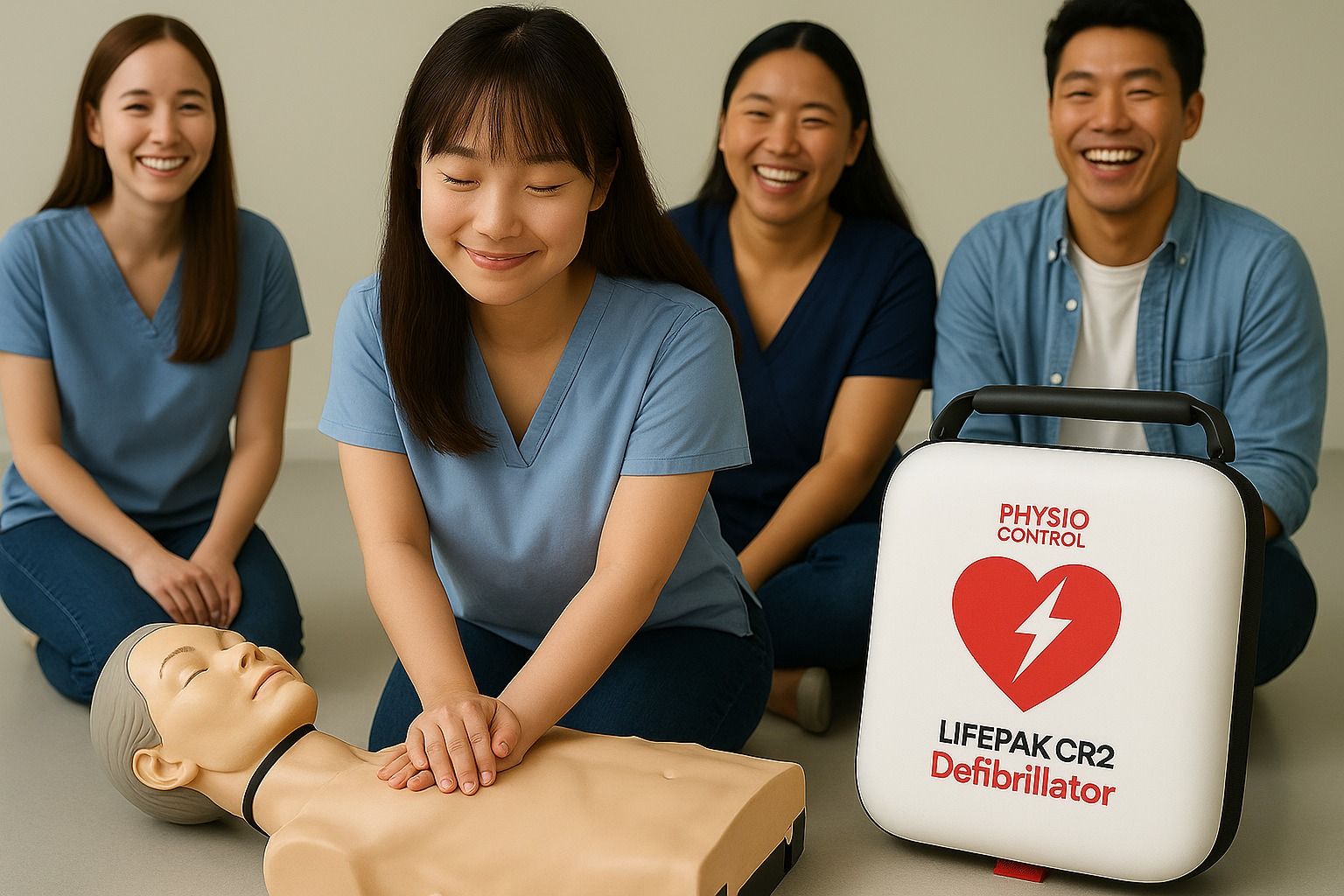
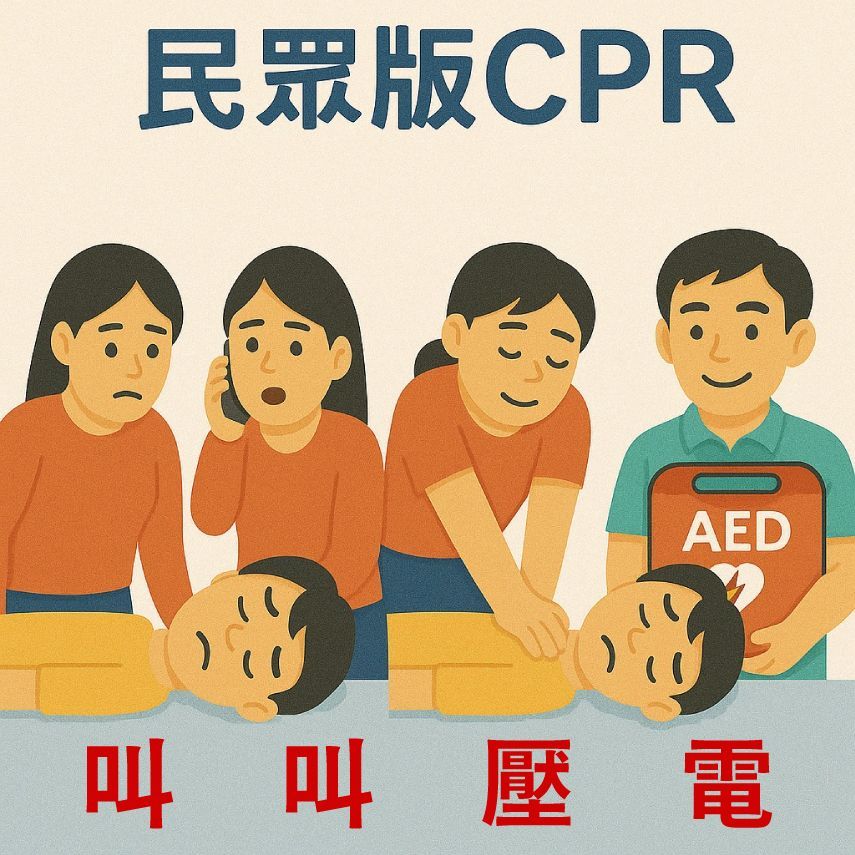
The Latest Public CPR Sequence: Call, Call, Push, Shock
1️⃣ Call: Check safety and try to wake the patient
First, check that the surrounding environment is safe for both you and the patient. Then tap the patient's shoulder and call out loudly to check for a response. Only proceed with rescue efforts if the patient is unresponsive.
2️⃣ Call: Get help and dial 119
Call out to anyone nearby to dial 119 and locate the nearest AED. If you're alone, call 119 immediately and put your phone on speaker to follow the dispatcher's real-time instructions.
3️⃣ Push (Compressions): Perform chest compressions
When the heart stops, blood can no longer circulate oxygen on its own — continuous, steady chest compressions are needed to maintain circulation and buy time until an AED or medical professionals take over.
Proper compression technique:
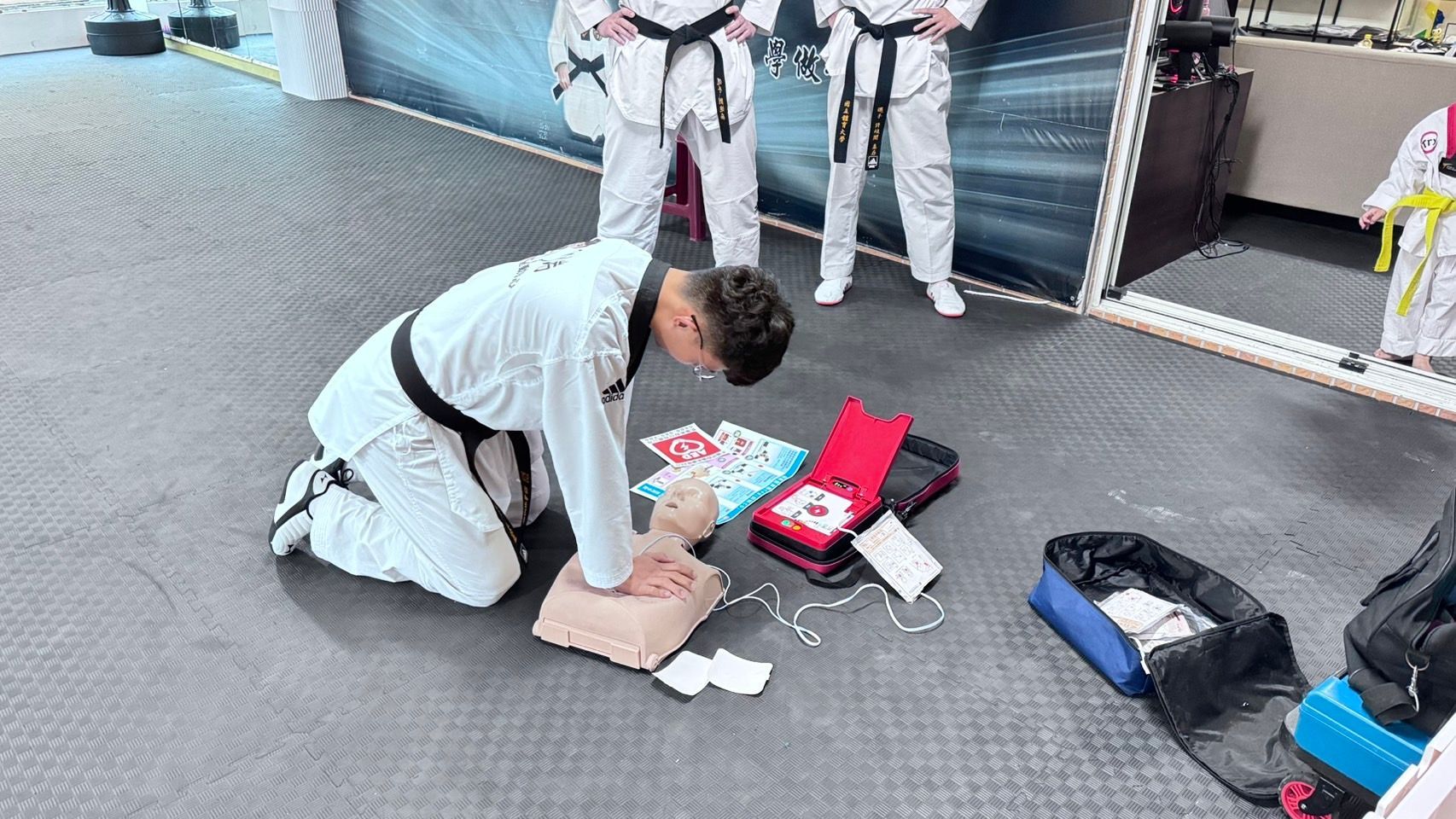
- Position: Kneel facing the patient, close to their side, with knees shoulder-width apart for stability.
- Hand placement: Interlock your hands, placing the heel of your bottom hand at the center of the chest, between the nipples, with elbows fully extended.
- Technique: Push straight down using your body weight, at a rate of about 2 compressions per second (100–120 per minute), to a depth of at least 5 cm.
- Full recoil: Let the chest rise fully between compressions without lifting your hands off the chest.
- Minimize interruptions: Avoid stopping unless necessary, and never pause for more than 10 seconds.
4️⃣ Shock (Defibrillation): Use the AED
Once the AED arrives, follow the voice and visual prompts right away. The AED will automatically analyze the patient's heart rhythm and determine whether a shock is needed:
If a shock is advised, make sure no one is touching the patient before pressing the button.
Resume chest compressions immediately after the shock.
The AED will reanalyze the heart rhythm every 2 minutes — follow its prompts and repeat as needed until the patient regains a pulse, becomes responsive, or EMS takes over.
The Latest "Professional" CPR Sequence: Call, Call, C, A, B, D
Based on the Ministry of Health and Welfare's 2021 updated CPR guidelines, the current recommended sequence is "Call-Call-C-A-B-D," where "D" stands for retrieving and using an AED. The full steps are:
1️⃣ Call (Check Responsiveness)
- Tap the patient and call out to check for a response.
- Make sure the environment is safe for both rescuer and patient.
2️⃣ Call (Get Help)
- If the patient is unresponsive, have someone nearby call 119 immediately and locate an AED.
- If no one else is present, perform about 2 minutes (5 cycles) of CPR first, then call 119.
- Put your phone on speaker and follow the dispatcher's instructions.
3️⃣ C (Compressions)
- Kneel beside the patient, hands interlocked, elbows straight, and push straight down using your body weight at the center of the chest, between the nipples.
- Rate: 100–120 compressions per minute, depth of about 5–6 cm.
- Never pause for more than 10 seconds to keep circulation going.
4️⃣ A (Airway)
- Use the "head-tilt, chin-lift" technique: one hand on the forehead, the other lifting the chin, to open the airway.
5️⃣ B (Breathing)
- Pinch the patient's nose, seal your mouth over theirs, and give a rescue breath, checking for chest rise.
- After 2 breaths, return immediately to chest compressions (step C).
- Cycle: 30 compressions + 2 rescue breaths, repeated continuously.
6️⃣ D (Defibrillation)
- Turn on the AED and follow the voice prompts.
- Attach the pads, make sure no one is touching the patient, then press the shock button.
- Resume chest compressions immediately after the shock.
Setting aside the complicated details of the recent news story involving a person accused of impersonating a volunteer firefighter, it's a good moment to reflect on the two-way relationship between rescuer and rescued in a CPR emergency. When someone collapses in cardiac arrest, many people hesitate to step in, worried about legal liability — afraid that doing the right thing might come back to hurt them.
So, could performing CPR actually create legal liability, and how can rescuers protect themselves? Here's a look at the legal protections and what to keep in mind.
Can You Be Sued for Performing CPR?
The recent news surrounding YUKI's alleged impersonation of a volunteer firefighter has stirred up a lot of controversy. Setting aside the complicated questions around her identity, it's a good moment to reflect on the two-way relationship between rescuer and rescued in CPR. When someone suddenly collapses in cardiac arrest, many people hesitate to step in, worried about legal liability — even fearing that doing the right thing might get them sued instead. In reality, many countries and regions have laws protecting good-faith rescuers, so the public doesn't need to worry about legal risk when performing CPR (Cardiopulmonary Resuscitation).
So, could performing CPR actually create legal liability, and how can rescuers protect themselves? Below, we'll break this down from the angles of legal responsibility, protective measures, and key points to keep in mind.
In most cases, performing CPR does not create legal liability, since the rescuer is acting in good faith. That said, legal disputes can arise in certain extreme situations, such as:
- Improper technique causing secondary injury — if compressions are done incorrectly and result in broken ribs or other injuries, family members may pursue a claim.
- Disagreement over whether resuscitation should have been attempted — for example, if the patient had a Do-Not-Resuscitate (DNR) order, family members may question the rescuer's actions.
- Delaying professional medical care — if a rescuer's actions are seen as having delayed EMS treatment, it could lead to a dispute.
Overall, as long as CPR is performed reasonably, in good faith, and following standard procedure, rescuers are generally protected from legal liability.
What the "Good Samaritan Law" Says
Many countries have a "Good Samaritan Law" that protects people who act in good faith to help someone in an emergency, shielding them from legal liability for their rescue efforts.
In Taiwan, Article 14 of the Emergency Medical Care Act states that a rescuer is exempt from liability for injury to the patient, unless caused by gross negligence. In other words, as long as the rescuer isn't acting with intent to harm or with serious negligence (such as clear misuse of an AED), they will not be held legally responsible.
Similar protections exist in other countries, including the United States, Japan, and Canada — good-faith rescuers are generally not held legally liable even if the patient is injured during the rescue.
What to Do If a Dispute Arises
Even with these legal protections in place, if you do face questions or a potential dispute from family members, here's what to do:
- Preserve evidence from the scene — if there were witnesses, ask them to help confirm what happened, or check for security camera or phone footage.
- Clearly explain what happened — describe the situation and the steps you took to medical staff or police, so your actions are documented as following standard procedure.
- Seek legal advice if needed — if a legal dispute does arise, consult a lawyer and rely on Good Samaritan Law protections as part of your defense.
Don't Hesitate to Help — the Law Has Your Back
In an emergency, starting CPR right away can be the difference for a patient's survival. While some worry about "doing good and getting blamed for it," the law in most places clearly protects good-faith rescuers who follow proper procedure.
Learning CPR and AED skills doesn't just help you save a life — it helps build a safer community. Next time you're faced with an emergency, don't hesitate. Your action could change someone's life.