


The Essential AED Manager's Guide for 2026
Device Lifespan, Maintenance Risk Management & Consumable Replacement
Is your device approaching end-of-life,
or is management becoming a challenge?
As an AED Manager in a business or public venue, you are responsible for more than a piece of equipment — you are responsible for the lives of everyone on the premises. The question that keeps most managers up at night isn't "how do I save someone?" It's: "What if the device fails when we actually need it?"
This guide offers a practical overview of the key points in AED maintenance, helping you understand the relevant regulations and the risks of expired equipment.
Regulatory Overview: Four Core Obligations Every AED Manager Must Fulfill
Under the Regulations Governing Emergency Medical Equipment in Public Places, venues required to install an AED must comply with the following management requirements:
Designated Manager and Registration:
The venue must designate an AED Manager and register that individual in the Ministry of Health and Welfare database. Any change of Manager must also be updated accordingly.
Mandatory Training Requirements:
AED Managers:must complete
220 minutes of professional training — comprising a 180-minute full CPR & AED course and a 40-minute management module — with refresher training required every two years.
All staff:At least 70% of insured employees must have completed CPR & AED training before the venue can apply for Safe Place Certification.
Regular Inspection and Record Keeping:
Inspection records — covering battery status, consumable expiry dates, and device functionality — must be maintained and kept for at least two years. Results must be logged regularly in the database.
Post-Use Reporting Obligations:
Consumables must be replenished immediately after use. The usage report and electronic data must be uploaded to the database within 7 days.
🔎 Learn More About CPR & AED Courses
🔎 Learn More About
Applying for Safe Place Certification
Why "Hanging on the Wall" Doesn't Mean "Ready to Use"
Understanding Silent AED Failure
An AED left in standby mode without professional maintenance is vulnerable to three types of silent failure:
Electrode Pad Degradation:
The conductive gel on expired pads may deteriorate, preventing effective delivery of the shock.
Insufficient Battery Power:
Even if the device has never been used, the battery gradually depletes through standby consumption. Failing to replace it on the manufacturer's recommended schedule may leave the device unable to deliver adequate power in an emergency.
Component Aging and Wear:
As an electronic device, an AED is subject to natural aging and component wear over time, influenced by both the years since manufacture and the installation environment.
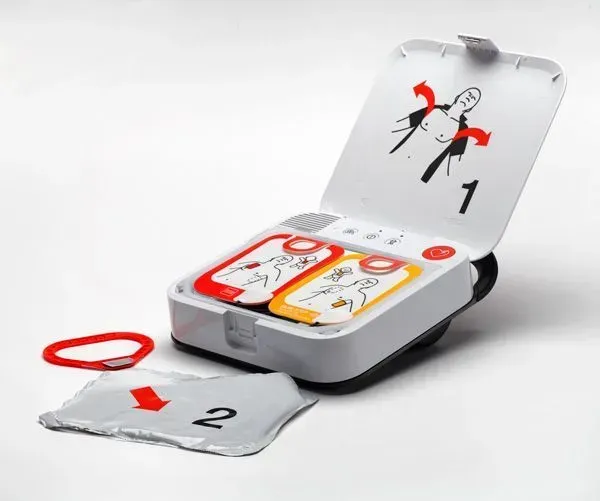
The Essentials of AED Maintenance: Lifespan and Consumable Schedules
Every AED Manager should have this maintenance reference table committed to memory — it is the first step toward regulatory compliance:
| Maintenance Item | Recommended Replacement / Inspection Interval | Risk Warning |
|---|---|---|
| Device lifespan | 8 years | Whether domestic or imported, AEDs carry a maximum warranty of 8 years. Once the device exceeds its service life, manufacturers recommend replacement and may discontinue consumable supply for older models. |
| Electrode pads | 2–4 years (model-dependent) | Not recommended for use after expiry, even if the packaging remains sealed. |
| Device battery | 2–5 years (model-dependent) | An expired battery may retain enough charge to keep the device in standby mode, but may be unable to deliver sufficient energy for defibrillation. |
| Cabinet alarm battery | 1–3 years | Ensures the alarm functions correctly — drawing attention in an emergency and helping deter theft. |
Finding AED Management Too Time-Consuming? There's a Smarter Way.
The KLUX AED Management System stores self-diagnostic records, sends consumable expiry reminders, and notifies you of device anomalies — significantly reducing the manual tracking burden. Contact us to learn more about implementation.
Can You Keep Using an AED After Its Service Life Expires?
Many managers assume that because an AED is rarely used, expiry doesn't matter — simply replacing the consumables should be sufficient. But what managers must understand is this: the "service life" of a medical device is the only guarantee the manufacturer provides for component reliability. Once internal capacitors and electronic components age, the device may fail to charge or become inoperable at a critical moment.
The legal reality is equally sobering. Taiwan's《
Emergency Medical Services Act 》protects those who attempt to save lives — but it
does not protect organizations whose equipment fails. If a rescue attempt fails due to an expired device, the organization may face legal action for
failure to fulfill its management responsibilities. The potential compensation and reputational damage far outweigh the cost of replacing the device.
Risk Management Guide:
How to Manage Your AED Effectively and Stay Compliant
To reduce the management burden while ensuring full legal compliance, AED Managers have the following options:
Switch from Purchase to Lease:
Under a lease arrangement, consumable tracking and replacement become the responsibility of the AED provider, keeping your device in a state of compliant readiness at all times.
🔎 For a detailed comparison of lease and purchase costs and plan options, see: AED Lease vs. Purchase — The Complete Comparison.
Establish a Device Replacement Plan:
Proactively report end-of-life risk to management and advocate for timely replacement in the interest of public safety.
Outsource Staff Training:
All KLUX instructors hold BLSI (Basic Life Support Instructor) certification or above, and can deliver regulatory-compliant first aid training courses to help your organization meet the Safe Place Certification training requirements.
My AED Is Approaching End-of-Warranty
Should I Keep It or Replace It?
AED warranty periods vary by brand, typically ranging from 5 to 8 years. Regardless of brand, replacement is recommended after a maximum of 8 years of service.
If you are considering a device upgrade or switching to a lease plan, contact KLUX for end-of-life replacement planning and lease upgrade options. We respond within one business day.
10,000+ Units Installed Nationwide | IoT Cloud Management | On-Site Service Across Taiwan, Penghu, Kinmen, and Matsu
FAQ
What training is required for an AED Manager?
AED Managers are required to complete 220 minutes of professional training, comprising a 180-minute full CPR & AED course and a 40-minute management module, with refresher training required every two years. At least 70% of all insured employees must have completed CPR & AED training before the venue can apply for Safe Place Certification from the Ministry of Health and Welfare.
How often should AED electrode pads and the battery be replaced?
Electrode pads should be replaced every 2–4 years depending on the model. Use after expiry is not recommended, even if the packaging remains sealed. The device battery should be replaced every 2–5 years depending on the model. The cabinet alarm battery should be replaced every 1–3 years.
What is the service life of an AED?
Regardless of whether an AED is domestically manufactured or imported, the maximum service life is 8 years. After this point, manufacturers recommend replacement and may discontinue consumable supply for the older model. Organizations are advised to proactively establish a device replacement plan.
The AED has exceeded its service life but appears to be functioning normally. Can we continue using it?
This is not recommended. The service life of a medical device is the only benchmark the manufacturer provides for component reliability. Once internal capacitors and electronic components age, the device may fail to charge or become inoperable in an emergency. Furthermore, if a rescue fails due to an expired device, the organization may face legal action for failure to fulfill its management responsibilities.
What reporting obligations does an AED Manager have after the device is used?
Consumables must be replenished immediately after use. The usage report and electronic data must be uploaded to the Ministry of Health and Welfare database within 7 days.
How can the AED management burden be reduced?
There are three main approaches: first, switch from a purchase plan to a lease arrangement, shifting consumable tracking and replacement to the provider; second, implement an IoT cloud monitoring system for real-time device status updates; third, outsource staff training to a professional provider to ensure the required training hours and certifications are met in full compliance with regulations.
KLUX: Your Partner in Workplace Emergency Safety
KLUX believes that meeting the legal minimum is just the starting point — saving lives is our real goal. With KLUX by your side, being an AED Administrator doesn't have to be a heavy burden.
💡 From equipment procurement and consumables management to training and cloud monitoring, KLUX offers a one-stop AED management solution — helping your facility go from simply "having a device" to being truly ready to save a life.
👉 [Book a Course]:Let KLUX's professional instructors help your facility meet Safe Place Certification training requirements.
👉
[Book a Consultation]:Let KLUX's professional consultants assess your facility's regulatory compliance and equipment risk.