


10 Venues Legally Required to Install an AED in Taiwan [2026]
Does Your Organization Need One? The Complete Installation Guide
What Are the Requirements for Installing an AED
Why Do Public Venues Need an AED?
As public awareness of emergency response grows, AEDs have become an essential lifesaving tool. Under regulations issued by Taiwan's Ministry of Health and Welfare, certain public venues are legally designated as "AED-required locations" and must have an AED on-site to address sudden cardiac arrest and improve survival outcomes.
*Sudden Cardiac Arrest (SCA):
A medical emergency in which the heart suddenly stops functioning. Without effective intervention — including CPR and AED use — within the critical 4-minute window survival rates drop dramatically.
*AED (Automated External Defibrillator):
An easy-to-use emergency device that delivers an electric shock to restore normal heart rhythm and improve survival chances. Installing AEDs in high-traffic or high-risk areas is not only a legal obligation — it is a fundamental commitment to public safety.
Why AEDs Matter: A Lifesaving Device for Critical Moments
The primary purpose of an AED is to enable rapid emergency response and reduce deaths from cardiac arrest. For individuals experiencing a heart attack, an AED is the first line of defense. Its straightforward operation and clear voice guidance allow non-medical personnel to respond effectively in an emergency.
The Following 10 Venue Types Are Required by Law to Install an AED (Regulations updated May 10, 2023)
Under the
Ministry of Health and Welfare's official list of Public Places Required to Install AEDs, the following 10 categories of venues are legally required to have an AED on-site.
1. Major Transportation Hubs
- Airports and HSR stations
- Taiwan Railways stations of Class 3 or above
- MRT stations and bus terminals
- Freeway service areas
- Port passenger service areas
2. Long-Distance Transport Vehicles
- HSR trains
- Passenger aircraft with more than 19 seats and cabin crew assigned
- Passenger vessels exceeding 100 gross tons or carrying more than 150 passengers
3.Tourist and Recreational Areas
- National scenic areas
- Scenic areas administered by municipalities or counties
- National parks and forest recreation areas
- Reservoirs open to tourism and recreation
- Amusement parks, cultural parks, farms, and other tourist attractions
4. Schools and Large Assembly Venues
- Schools at junior high level and above
- Courts, the Legislative Yuan, and local councils
- Fitness centers and sports centers
- Funeral homes
- Religious assembly venues with an average daily attendance of 1,000 or more
5. Large Entertainment Venues
Venues with an average daily attendance of 1,000 or more, including:
- Cinemas and theaters
- KTV and audiovisual entertainment venues
- Performance halls
- Sports arenas (e.g., Taipei Arena)
- Libraries, museums, and art galleries
6. Large Retail Venues
Venues with an average daily attendance of 1,000 or more, including:
- Large shopping malls (including underground shopping streets)
- Hypermarkets, supermarkets, welfare stores, and department stores
7. Accommodation Facilities
- Hotels, inns, and guesthouses with more than 100 guest rooms (sleeping accommodations only)
8. Large Public Bathing Facilities or Hot Spring Areas
- Bathing facilities or hot spring areas with an average daily attendance of 100 or more during peak season
9. Government Service Units
- Police precincts, stations, and substations
10. Special Institutions
- Military bases with more than 1,000 personnel
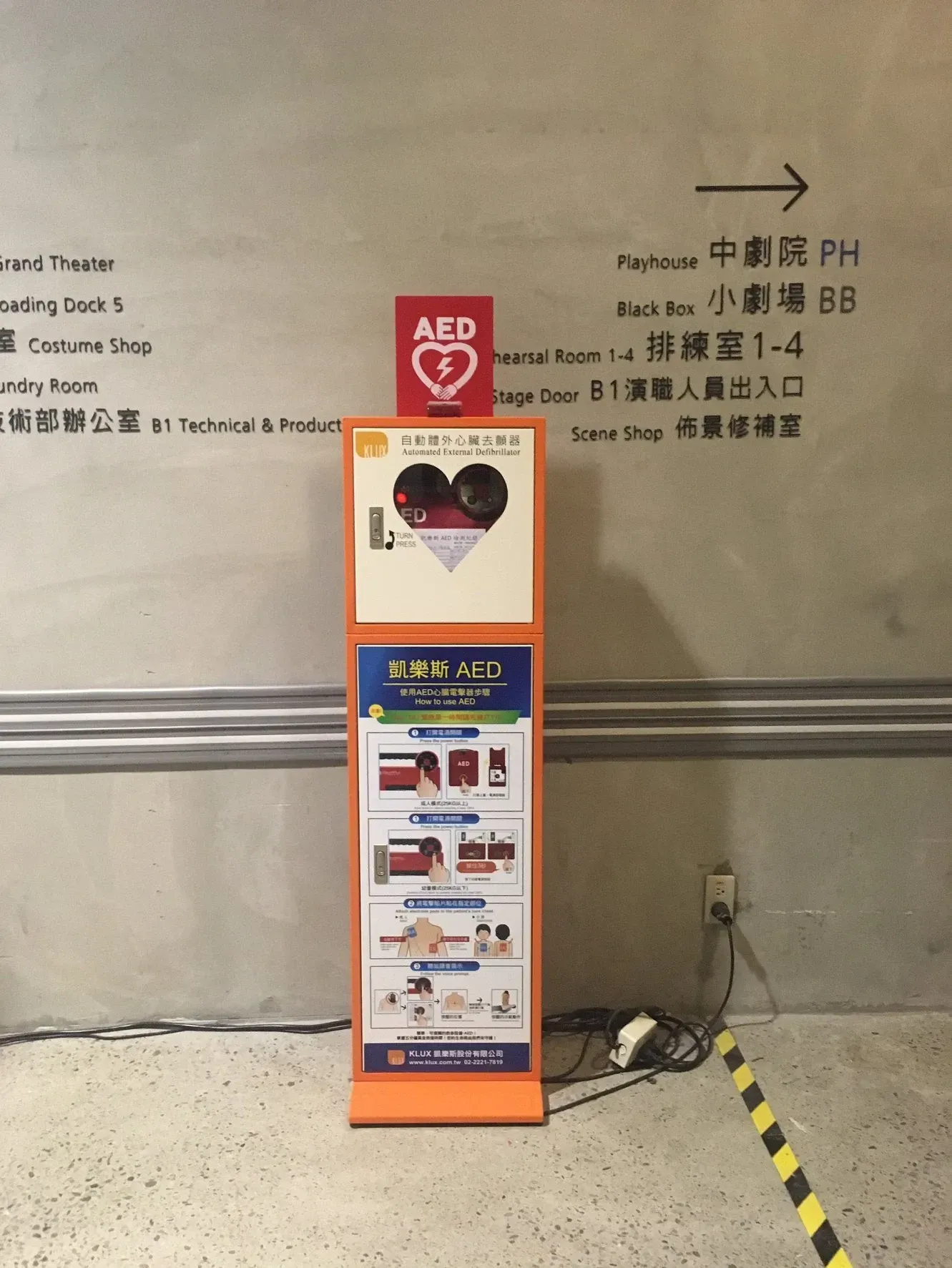
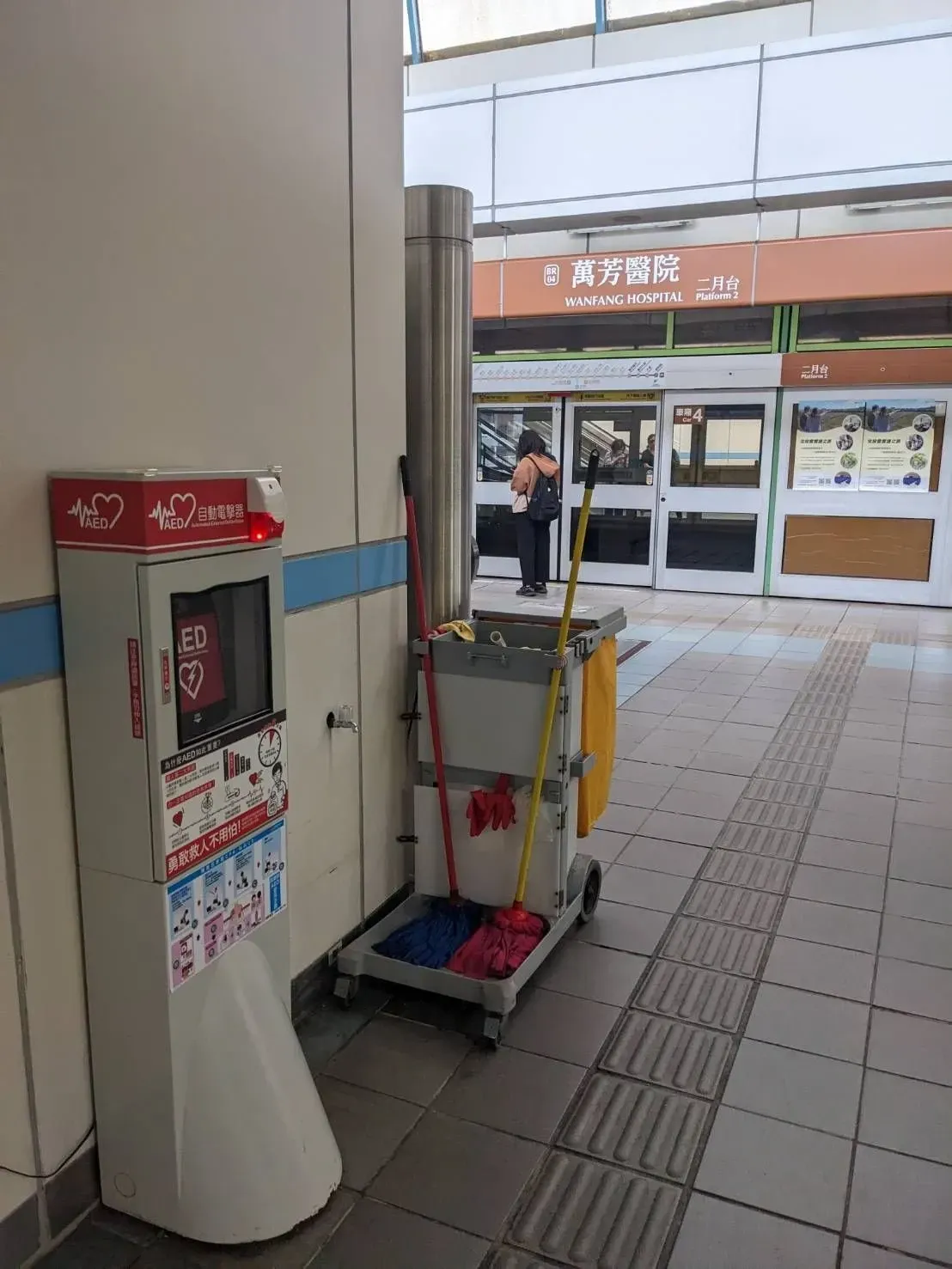
Beyond the Law: Why More Organizations Are Choosing to Install AEDs Voluntarily
According to Ministry of the Interior statistics, Taiwan records over 16,000 cases of out-of-hospital cardiac arrest (OHCA) annually. While regulations only mandate AED installation at specific venues, emergencies do not choose their location — they can happen anywhere.
Private offices, small manufacturing facilities, community activity centers, and gathering venues may not be legally required to install an AED. However, the people who come and go every day are those we care about most. Providing an extra layer of safety is a tangible expression of genuine care and concern for their well-being.
For business owners and venue managers who value both human life and their organization's reputation, voluntarily installing an AED is a meaningful investment in workplace safety:
- The Last Line of Defense for Employees and Visitors: With average ambulance response times of 6–10 minutes and a critical rescue window of just 4 minutes, having an AED on-site is the strongest commitment an organization can make: we care about every person here.
- A Practical Commitment to ESG and Corporate Sustainability: In today's socially conscious business environment, installing an AED and completing employee first aid training is one of the most effective ways to strengthen your organization's reputation, earn Safe Place Certification and stand out in ESG assessments.
- An Invisible Shield Against Legal and Operational Risk: Proactively equipping your workplace with emergency response tools demonstrates a responsible commitment to safety. Should an incident occur, thorough preparation can significantly reduce the risk of legal disputes and operational liability.
👉 KLUX offers AED purchase and lease options — contact us for a customized solution to your venue
3 Essential Elements for Effective AED Readiness
- CPR Training: Combined with AED use, acting within the critical time window significantly improves survival outcomes.
- AED Purchase/Lease Service: Work with a professional AED provider for installation and maintenance, ensuring your device is always ready when needed.
- Regular AED Inspection: Keep your device in working order, replace consumables on schedule, and stay current with the latest first aid guidelines.
Installing an AED in a public venue is a critical commitment to life safety. Confirming whether your organization meets the mandatory installation criteria is the first step — but ensuring the device actually works when needed matters just as much as legal compliance.
KLUX provides expert AED installation consultation and a complete one-stop service — covering device selection, installation, ongoing maintenance, and staff training.
I Know I Need an AED — What's Next?
KLUX's expert team, with over 17 years of AED experience, will advise you on device models, quantity, placement planning, and after-sales support — helping you build a fully compliant setup.
Trusted by leading tech and financial enterprises and Taipei Metro | 10,000+ Units Installed Nationwide
FAQ
Can I install any brand or model of AED?
The device must be registered with the central health authority and hold a valid import or manufacturing license for medical devices. It must also be capable of automatically analyzing the patient's cardiac rhythm and delivering external defibrillation.
After installing an AED, is registration with the authorities required?
Yes. Public venues must register the AED in the database designated by the central health authority within seven days of installation. Any subsequent changes must also be updated in the database.
Is an AED Manager required?
Yes. Public venues must designate an AED Manager and register that individual in the database. Any change of Manager must also be recorded. The Manager is required to complete AED training as announced by the central health authority, with refresher training required every two years, and must be registered accordingly.
What are the regulatory requirements for AED use and maintenance after installation?
- Public venues must inspect the AED's battery, consumables, and functionality at least every six months, maintain the device in proper working order, keep inspection records for at least two years, and log results in the database.
- Consumables must be replenished immediately after each use.
- Following any AED-assisted rescue, venues must complete a usage report and submit it — along with the AED's electronic data — to the database within seven days.
What happens if a venue required by law to install an AED fails to do so?
- Venues must complete AED installation within one year of being designated by the central health authority. Those unable to meet the deadline must submit a written request for an extension to the relevant central authority and complete installation within the approved timeframe.
- Venues that fail to install an AED as required, or that violate related provisions, will be advised by the municipal or county competent authority to make improvements within a set period. Failure to comply will result in the venue being reported to the central authority for further supervisory action.
Can a venue apply for Safe Place Certification after installing an AED?
Yes. The following conditions must be met:
- The venue must complete registration in the AED information system.
- The venue floor plan must clearly indicate the AED location with visible signage.
- At least 70% of all staff must have completed CPR & AED training; the designated AED Manager must have completed the required Manager training.
For full eligibility requirements, application procedures, and document checklist, refer to: The Complete Guide to AED Safe Place Certification
Our organization is not on the mandatory list. Is it still worth installing an AED?
Absolutely.
Cardiac arrest can happen to anyone, anywhere, at any time. From the perspective of risk management, organizational reputation, and the critical rescue window, installing an AED is the single most effective safety measure any venue can take.
If my venue is not legally required to install an AED, are there any practical benefits or incentives for doing so?
While the government does not currently offer direct financial subsidies for non-mandatory venues, organizations that install an AED may benefit in several ways:
- Safe Place Certification can strengthen trust among clients and employees.
- Some commercial or public liability insurance policies may offer premium discounts to venues with established emergency response equipment and safety plans.
- AED purchases or lease payments may be recorded as operating expenses, providing a tax deduction benefit.
FAQ regulatory source: Ministry of Health and Welfare Order Wei-Bu-Yi-Zi No. 1121663235, issued May 10, 2023
2026 AED Placement Regulations & Extended Reading
Installing an AED goes beyond meeting legal requirements — it's also a meaningful expression of corporate ESG responsibility. KLUX has spent years specializing in emergency equipment, helping leading institutions, schools, and top enterprises across Taiwan build safer environments.
From initial site assessment and Stryker-branded equipment planning to ongoing 4G cloud maintenance and CPR + AED training, KLUX provides end-to-end professional consulting. Wherever you're based — Taipei, Taichung, or Kaohsiung — our nationwide team can help your facility achieve round-the-clock smart protection.
- What Is an AED? A Complete Guide to Uses, Pad Placement, Pricing, and Brand Selection (2026 Edition)
- Are AEDs Expensive? Lease or Purchase? A Complete Buyer's Guide
- What Is CPR? Can You Be Sued for a Failed Rescue Attempt? Everything You Need to Know
- How Much Does a Home AED Cost? Can You Install One at Home? A Complete Buying Guide
- Safe Place Certification Guide: 3 Requirements, 5 Steps, and ESG Benefits for Businesses
Medical Device Manufacturing License No. 005119 (Ministry of Health and Welfare)