

What Is an AED?
2026 Complete Guide
How AED Works, Pad Placement, Pricing & Brand Selection
What Are the Requirements for Installing an AED?
Jump to a Section
- What is an AED? How does it help "restart" the heart? Can anyone use one?
- When should an AED be used? Are there any restrictions?
- CPR Steps: Call-Call-Push-Shock + AED Operating Steps: On, Attach, Connect, Shock
- How to Apply AED Pads — It's Different for Adults and Children
- AED Legal Liability FAQ: Could I Be Sued?
- AED Locations and How to Find One Near You
- Businesses and Communities Should Install AEDs Too — 5 Key Rules to Follow
- Where to Get an AED — KLUX Offers Certified Devices and Professional Training
- Frequently Asked Questions
- KLUX CPR & AED Group Training
- Further Reading
What Is an AED? How Does It Help "Restart" the Heart? Can Anyone Use One?
You may have seen red AED signs at MRT stations, sports centers, office buildings, stadiums, or schools — but what exactly is an AED? Who can use one? How does it work? And where can you find the nearest device?
When cardiac arrest strikes, an easy-to-use AED can be the difference between life and death. Used together with CPR, an AED significantly improves survival outcomes. According to the American Heart Association (AHA), when defibrillation is delivered within 1 minute of cardiac arrest, the survival rate can reach as high as 90%.
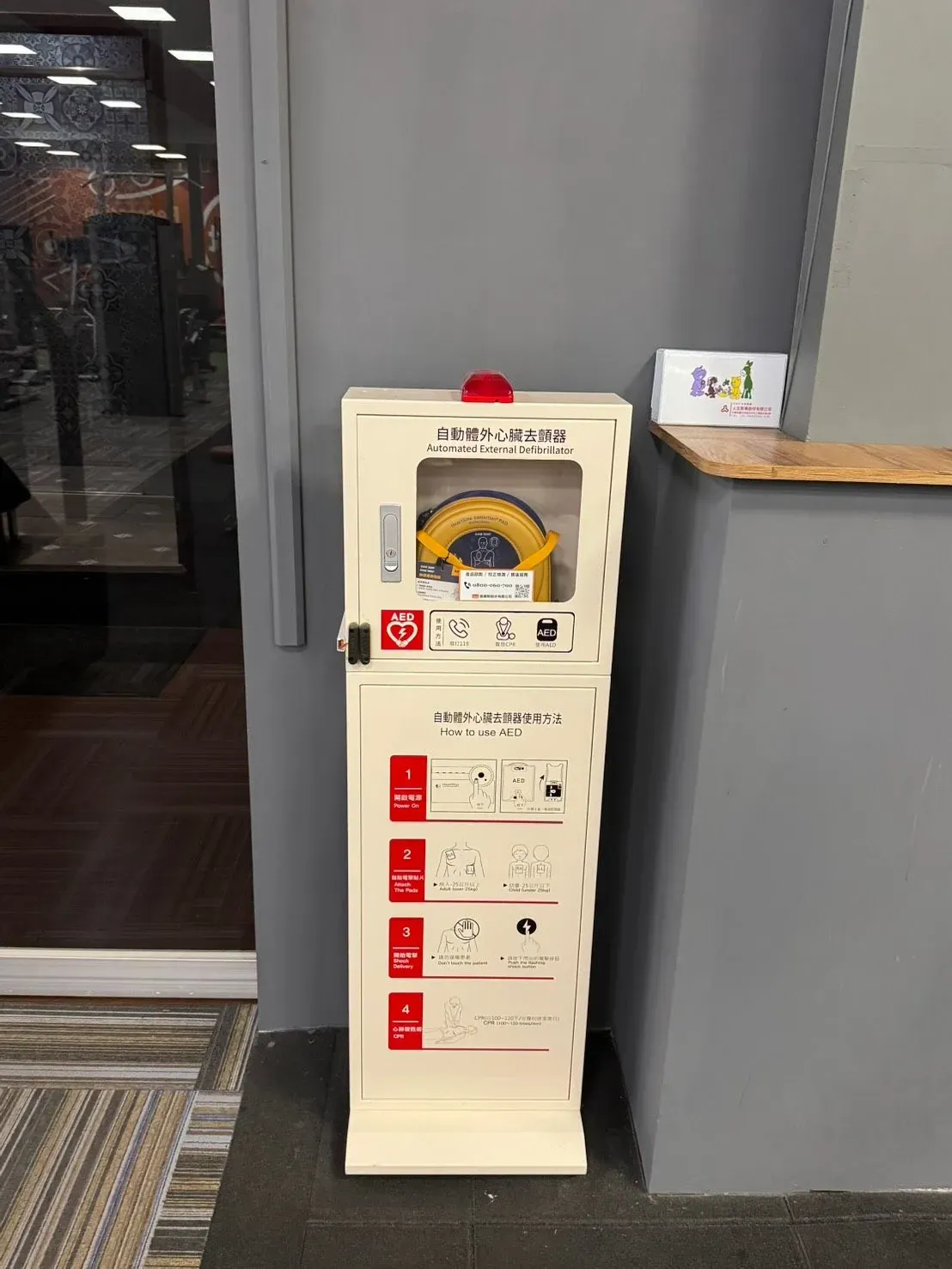
KLUX AED installed in a fitness center
ButtonWhat an AED Is and What It Does
AED stands for Automated External Defibrillator. It is a portable emergency medical device designed to treat sudden life-threatening arrhythmias, particularly two critical conditions:
- Ventricular Fibrillation (VF): The heart beats extremely fast and irregularly — up to 250 times per minute — rendering it unable to pump blood effectively.
- Ventricular Tachycardia (VT): The heart beats between 140 and 200 times per minute, which can also cause blood flow to stall and lead to cardiac arrest.
When these dangerous arrhythmias are detected, the AED automatically analyzes the patient's heart rhythm. If defibrillation is needed, it prompts the user to press the shock button. The electrical current stops the chaotic rhythm, giving the heart an opportunity to reset and resume normal function.
Once the pads are correctly placed, the AED re-analyzes the heart rhythm every two minutes, continuously assessing whether another shock is needed — until professional responders take over or the patient's normal rhythm is restored.
Why Is It Called a "Foolproof Defibrillator"?
The greatest advantage of an AED is that
anyone can use it. Much like many devices designed with fail-safe mechanisms, AEDs are built to be simple and intuitive — which is likely how the term
"foolproof defibrillator"
came about. With clear voice prompts and visual instructions, anyone — regardless of medical background — can follow along and respond effectively in an emergency.
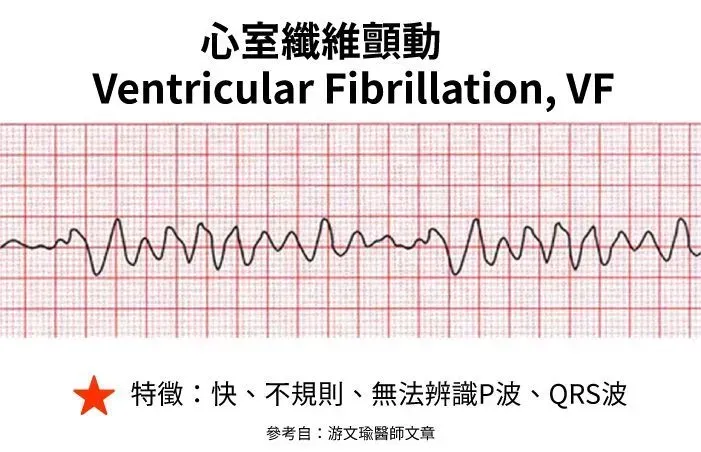
Ventricular Fibrillation (VF)
Button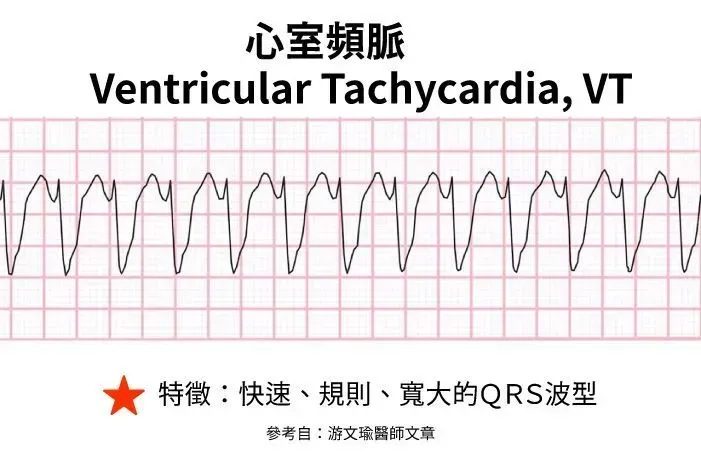
When Should an AED Be Used? Are There Any Restrictions?
When to Use an AED
An AED should be used whenever a person is unconscious, not breathing, and unresponsive — and cardiac arrest is suspected:
- Cannot be woken; no response
- No visible chest movement
- Abnormal or absent breathing
‼️ Remember: It is always better to retrieve the AED early than to miss the critical rescue window.
Before Using an AED: Important Checks
- Scene safety: Ensure the area is safe and move the patient to a flat, secure surface.
- Dry chest: If the patient's chest is wet from water or sweat, dry it thoroughly before applying pads.
- Excess chest hair: Shave if necessary to ensure the pads adhere properly.
- Medicated patches and metal jewelry: Remove any patches or metal items from the chest area to avoid interference with the shock.
- Pacemakers:
Position pads at least 3 cm away from any implanted pacemaker.
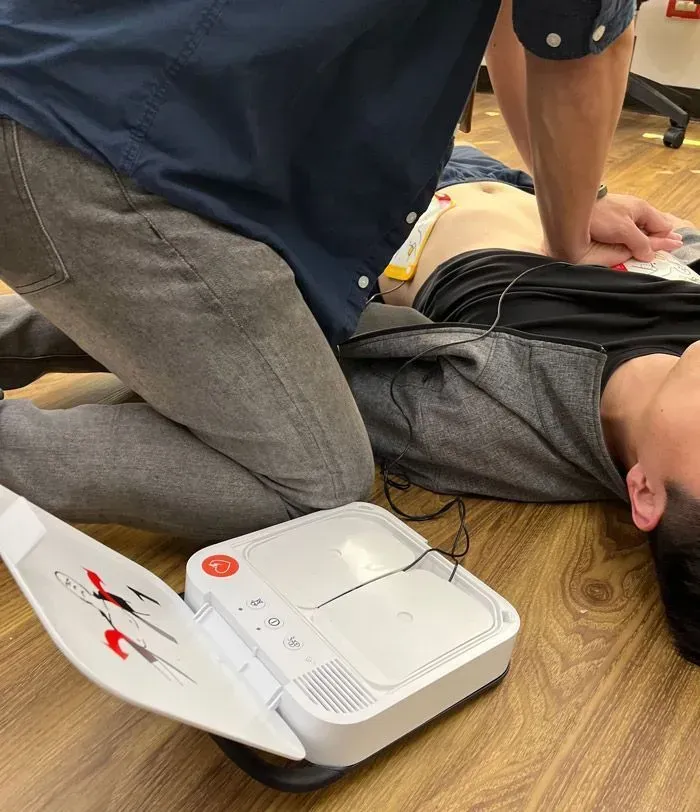
心室纖維顫動
CPR Steps: Call-Call-Push-Shock + AED Steps: On, Attach, Connect, Shock
What Are the CPR Steps: Call-Call-Push-Shock?
"Call-Call-Push-Shock" is the CPR + AED mnemonic promoted by Taiwan's Ministry of Health and Welfare for the general public. When someone suddenly collapses, loses consciousness, or stops breathing normally, following these steps can significantly improve the survival rate of out-of-hospital cardiac arrest (OHCA).
- Call (Check): Assess the patient's responsiveness and breathing
Check for a response and look for normal breathing. If the patient is unresponsive or not breathing normally, proceed immediately to the next step.
- Call (Help): Call 119 and shout for assistance
Shout for help, call 119, and retrieve the nearest AED.
- Push: Begin chest compressions (CPR)
Interlock your hands and place the heel of your bottom hand at the center of the chest, between the nipples. Compress to a depth of approximately 5–6 cm at a rate of 100–120 compressions per minute.
- Shock: Use the AED to deliver defibrillation
As soon as the AED is available, power it on and follow the voice prompts.
Why Are These CPR Steps So Important?
When cardiac arrest occurs, what happens in the first 4 minutes determines the patient's chance of survival.
- Every minute of delay reduces survival rate by approximately 7–10%.
- Immediate CPR can increase survival rates by 2–3 times.
- Defibrillation within 1 minute of onset can bring survival rates as high as 90%. (Source: Ministry of Health and Welfare)
- These steps give everyone a simple, effective framework to act in an emergency and save lives.
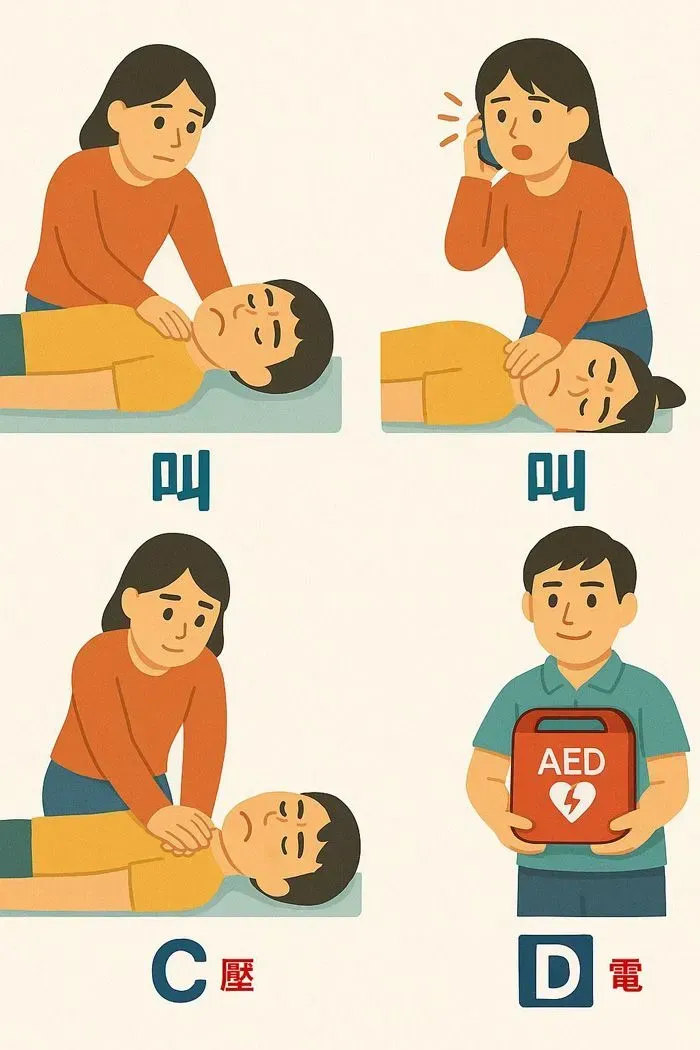
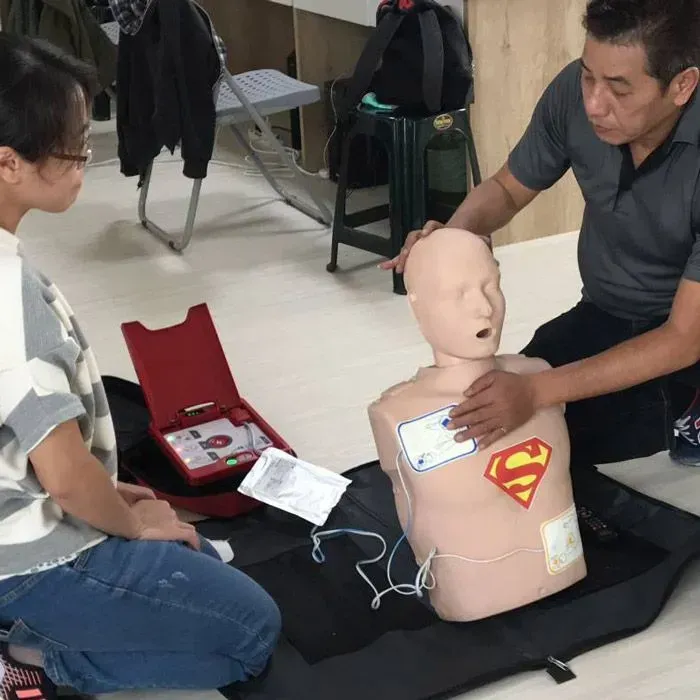
4 Steps to Operating an AED: On, Attach, Connect, Shock
■ On — Power On
Turn on the AED immediately and follow the voice prompts.
■ Attach — Apply the Pads
Following the diagram on the pads, place them in the correct positions on the patient's chest.
■ Connect — Plug In the Connector
Once the pads are in place, connect the pad cable to the AED unit.
If you are using a KLUX AED, the pads come pre-connected to the device.
■ Shock — Deliver the Shock
The AED will automatically analyze the patient's heart rhythm and determine whether a shock is needed. If a shock is advised, take the following precaution:
‼️ Call out loudly: "Stand clear — everyone step back!" Confirm no one is touching the patient, then press the shock button.
Master these four steps and you'll be ready to respond with confidence when it matters most.
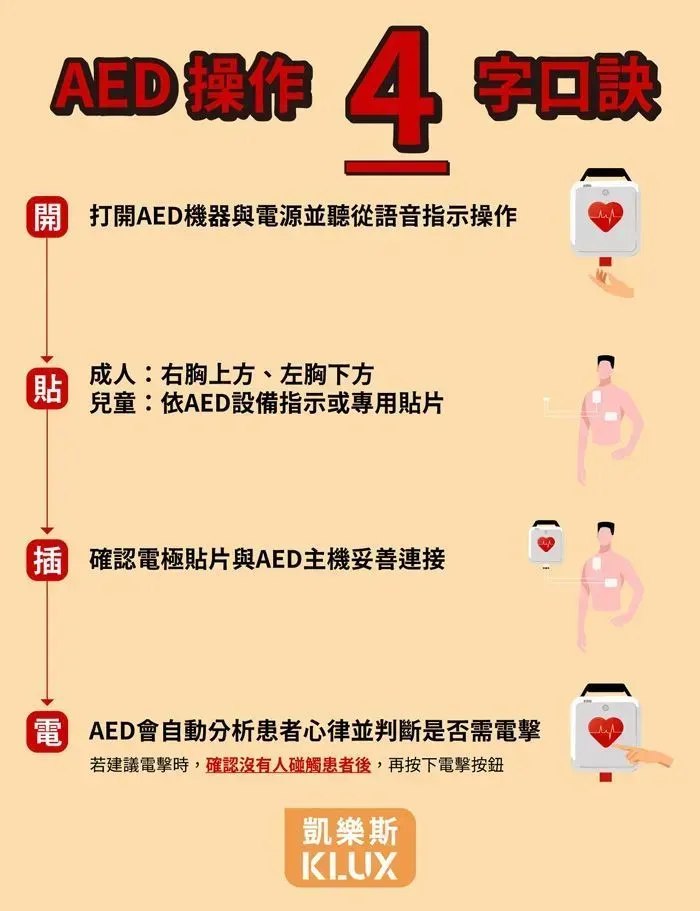
AED 4-Step Mnemonic: On — Attach — Connect — Shock
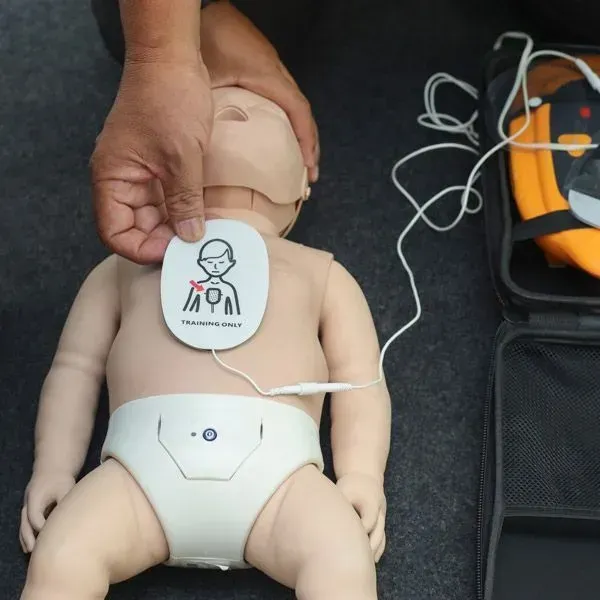
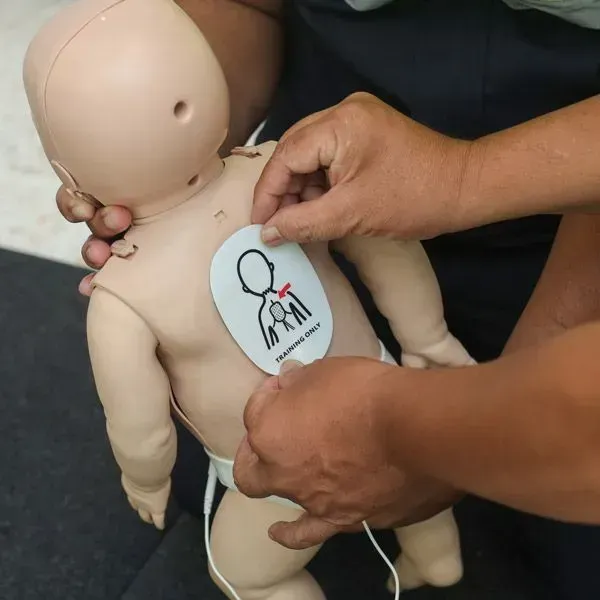
ButtonHow to Apply AED Pads — Different for Adults and Children
Adult Pads (for ages 8 and above, or body weight over 25 kg)
- One pad on the upper right chest (below the collarbone)
- One pad on the lower left chest (below the nipple, along the side of the ribcage)
Pediatric Pads (for infants and young children)
- One pad on the center of the chest
- One pad on the back, between the shoulder blades
AED Legal Liability FAQ: Could I Be Sued?
When someone collapses nearby and needs help, many people worry: "If I use the AED and they don't survive, could I be sued?" This concern holds many people back — but in fact, the law actively encourages bystanders to step in.
Under Article 14-2 of Taiwan's Emergency Medical Services Act, members of the public who use an AED or perform emergency first aid to save another person's life are protected under the "emergency necessity" exemption from liability.
"Emergency necessity" is explicitly defined in Article 24 of the Criminal Code and Article 150 of the Civil Code. In essence: actions taken in good faith during an emergency to prevent serious harm — such as a life-threatening situation — are legally exempt from liability.
If you act in good faith to help someone, even if they do not survive, you will not be held legally responsible — provided there is no clear negligence, such as deliberate harm or intentional misuse of the device.
That said, to further protect yourself, consider taking these steps while helping:
- Call 119 immediately.
- Ask a bystander to serve as a witness and obtain their contact information.
- Having prior CPR or AED training is an added advantage. Following the AED's voice prompts throughout the process also helps demonstrate that you acted appropriately.
‼️
When someone needs help, the law has your back. It doesn't just protect you — it actively encourages you to act.
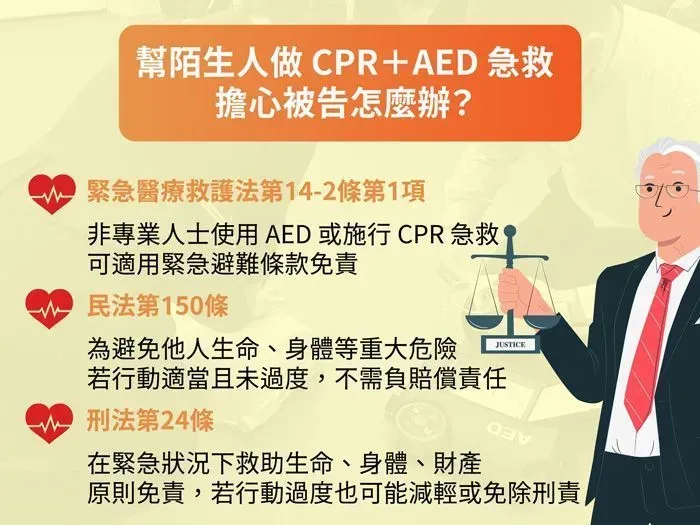
- Emergency Medical Services Act, Article 14-2: "A person other than emergency medical personnel who uses emergency rescue equipment or performs first aid measures to remove another person from imminent danger to life shall be subject to the provisions of exemption from liability under emergency necessity in the Civil Code and the Criminal Code. The same applies to emergency medical personnel acting outside of their duty hours."
- Criminal Code, Article 24: "An act committed out of necessity to avert imminent danger to the life, body, liberty, or property of oneself or another shall not be punishable. However, if the act of necessity is excessive, the penalty may be reduced or waived. The foregoing provision regarding the avoidance of danger to oneself does not apply to persons under a special duty by virtue of their public or professional role."
- Civil Code, Article 150: "A person who acts to avert imminent danger to the life, body, liberty, or property of oneself or another shall not be liable for damages, provided that the act was necessary to avoid the danger and did not exceed the extent of harm that the danger could have caused. If the person acting was responsible for creating the danger, they shall be liable for damages."
AED Locations and How to Find One Near You
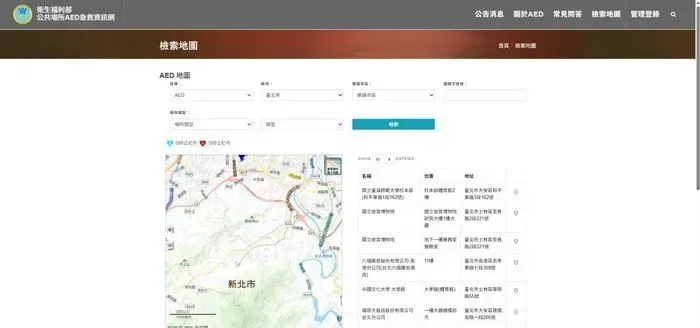
Use the Ministry of Health and Welfare AED Map
Visit the
Ministry of Health and Welfare AED Map,
enter a location or enable GPS to find the nearest AED. The map also highlights "Safe Place" venues, indicating the presence of trained first aiders on-site.
Which Venues Are Required by Law to Install an AED?
🔎 Read the full guide:2026 Regulatory Guide — 10 Venue Types Required to Install an AED
Under the
Ministry of Health and Welfare's official list of Public Places Required to Install AEDs
,the following venue categories must have an AED on-site:
| Venue Category | Details |
|---|---|
| Major Transportation Hubs | Airports and HSR stations Taiwan Railways stations of Class 3 or above MRT stations and bus terminals Freeway service areas Port passenger service areas |
| Long-Distance Transport Vehicles | HSR trains Passenger aircraft with more than 19 seats and cabin crew assigned Passenger vessels exceeding 100 gross tons or carrying more than 150 passengers |
| Tourist and Recreational Areas | National scenic areas Scenic areas administered by municipalities or counties National parks and forest recreation areas Reservoirs open to tourism and recreation Amusement parks, cultural parks, farms, and other tourist attractions |
| Schools and Large Assembly Venues | Schools at junior high level and above Courts, the Legislative Yuan, and local councils Fitness centers and sports centers Funeral homes Religious assembly venues with an average daily attendance of 1 |
| Large Entertainment Venues | Venues with an average daily attendance of 1,000 or more: cinemas and theaters, KTV and audiovisual venues, performance halls, sports arenas (e.g., Taipei Arena), libraries, museums, and art galleries |
| Large Retail Venues | Venues with an average daily attendance of 1,000 or more: large shopping malls (including underground shopping streets), hypermarkets, supermarkets, welfare stores, and department stores |
| Accommodation Facilities | Hotels, inns, and guesthouses with more than 100 guest rooms (sleeping accommodations only) |
| Large Public Bathing Facilities or Hot Spring Areas | Bathing facilities or hot spring areas with an average daily attendance of 100 or more during peak season |
| Government Service Units | Police precincts, stations, and substations |
| Special Institutions | Military bases with more than 1,000 personnel |
Businesses and Communities Should Install AEDs Too — 5 Key Installation Rules
Beyond public venues, many private organizations and even households are proactively installing AEDs to protect employees, residents, and family members. When installing, always work with a professional service provider and follow these guidelines:
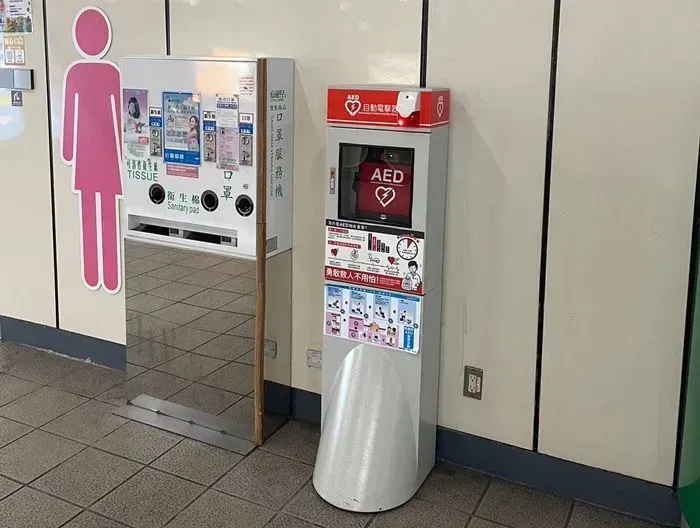
- Place the AED in a visible, easily accessible location
- Install a protective cabinet with an alarm
- Mount at least 120 cm above the floor and away from water sources
- Arrange regular maintenance by your service provider and schedule periodic first aid training, to keep the device ready and staff prepared
Where to Get an AED — KLUX Offers Certified Devices and Professional Training
For certified AED equipment and comprehensive CPR & AED training, trust KLUX!
- Ministry of Health and Welfare-approved AED brands available — both imported and Taiwan-made
- CPR & AED certification courses
- Full-service support: purchase, lease, and maintenance
🔎 Read the complete AED buying guide: How Much Does an AED Cost? Lease or Purchase — Which Is Right for You?
I Know What an AED Is — What's Next?
KLUX's expert team, with over 17 years of AED experience, will advise you on device models, quantity, placement planning, and after-sales support to help you build a fully compliant setup.
Trusted by leading tech and financial enterprises and Taipei Metro | 10,000+ Units Installed Nationwide
FAQ
Can an AED really restart the heart?
An AED does not simply "restart" a stopped heart. Instead, it delivers a precisely calibrated shock to eliminate the abnormal electrical activity causing the heart to fibrillate, giving it the opportunity to resume regular contractions and restore blood flow.
Why is an AED called a "foolproof defibrillator"?
Modern AEDs feature fully automatic rhythm analysis and voice-guided instructions. The device determines on its own whether a shock is needed — and will not deliver one if it isn't. This makes it safe for anyone to operate, even without a medical background.
I have no medical training. Can I still use an AED? Could I face legal liability if the person doesn't survive?
In an emergency, anyone can use a public-access AED. Article 14-2 of Taiwan's Emergency Medical Services Act provides a Good Samaritan exemption, protecting bystanders who use an AED in good faith. The law is designed to encourage the public to act within the critical 4-minute window.
What if the person is still breathing — could the AED shock them by mistake?
No. AEDs are equipped with highly sophisticated analysis systems that only charge when a life-threatening arrhythmia is detected. If the patient has simply fainted or has a normal heart rhythm, the device will prompt "no shock advised" — and pressing the shock button will have no effect.
Can an AED replace CPR?
No. An AED addresses the electrical problem in the heart, while CPR maintains blood circulation. Both are necessary and must be used together.
What is the difference between CPR and an AED? Can I use just one?
Both must be used together. CPR manually maintains oxygenated blood flow to the brain — buying time — while the AED corrects the abnormal heart rhythm. Studies show that when both are used within 1 minute of cardiac arrest, survival rates can reach 90%.
Can AED pads be applied over clothing? What if the patient is sweaty or wet?
No — pads must make direct contact with the patient's skin. If the skin is wet, dry it first. In addition to correct placement, observe the following 5 points:
- Remove any metal items from the patient's chest.
- Remove any medicated patches from the chest area.
- The patient should lie on a dry surface, and the chest must be kept dry.
- If the patient has an implanted pacemaker or internal defibrillator, position pads at least 3–5 cm away from the device.
- If the patient has significant chest hair, shave the area before applying pads.
All KLUX AED kits include a first aid accessory pack — containing a drying cloth and scissors — to help you prepare quickly.
KLUX CPR & AED Group Training
Ready to build real AED and CPR skills?
KLUX offers certified training courses covering everything from foundational principles to hands-on practice - all the essentials in a single session.
Further Reading: From AED Basics to Venue Installation
Understanding what an AED is marks only the first step toward protecting lives. As a professional emergency equipment provider, KLUX distributes AEDs from U.S.-based Stryker and domestic manufacturers, with service coverage spanning Taipei, Taichung, Kaohsiung, Hualien, and all of Taiwan's outlying islands.
We help organizations meet AED regulatory requirements and obtain Safe Place Certification, and support ongoing readiness through our professional IoT cloud management system and scheduled inspections — keeping every device at 100% readiness.
Beyond equipment purchase and lease plans, KLUX offers CPR & AED certification courses to help organizations fulfill their ESG workplace safety commitments and translate first aid knowledge into real-world response capability.
- How Much Does an AED Cost? Lease or Purchase — A Complete Guide
- What Is CPR? Could You Be Sued If It Doesn't Work? Everything You Need to Know
- Does My Organization Need an AED? 2026 Regulatory Guide — 10 Venue Types Required by Law
- AED Manager's Guide: Legal Obligations, Device Lifespan, and Consumable Replacement